
Microplane Premium Classic Zester Review: The Small Tool That Upgrades Every Dish
Disclosure: This post contains affiliate links. If you buy through them, we may earn a commission at no extra cost to you.
How we reviewed this: this article is based on research, manufacturer specs, and published owner and expert reports. We did not test the product hands-on.
Some kitchen tools earn their keep every week. The Microplane Premium Classic zester is one of them. It began life as a woodworking rasp, and the same sharp, photo-etched teeth now grate lemons, hard cheese, and spices with almost no effort. Based on published owner reports, here is where it works best and where it does not.
We cover zesting, cheese, spices, care, and who should own one.
Design
The Classic is a long, narrow stainless steel blade with a soft-grip handle. The teeth are cut by acid etching, not stamped, so each one is a tiny, sharp edge. The blade is about 12 inches long and one and a half inches wide. A plastic cover protects the teeth in a drawer. The narrow shape lets you grate right over a bowl, a pan, or a plate.
Zesting Citrus
This is the job it does best. Draw the fruit down the blade, turning it as you go, and you get a pile of fine zest with no white pith. The bitter pith stays on the fruit, so the zest tastes clean and bright. Lemon, lime, orange, and grapefruit all work well. Zest goes into baking, sauces, dressings, and drinks.
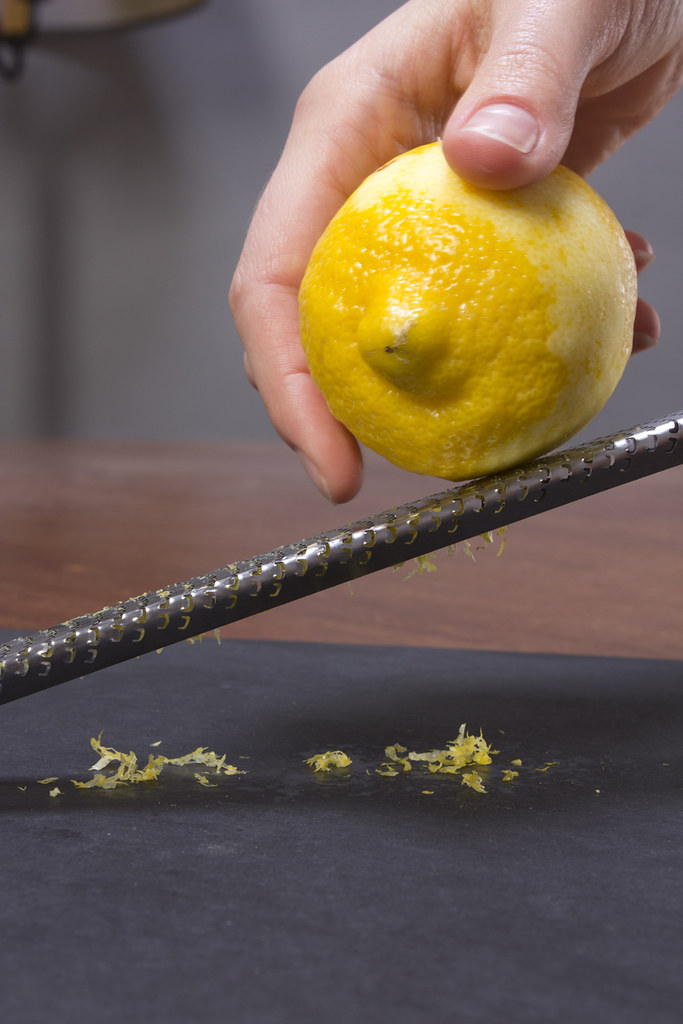
The lemon moves along the blade and leaves fine yellow zest, with the pith left behind. Image: Didriks via Flickr, CC BY 2.0 (creativecommons.org/licenses/by/2.0/)
Use light pressure and turn the lemon often. If you press too hard, you reach the pith. Work only until you see white, then rotate the fruit. A medium lemon gives about a tablespoon of zest.
Ginger, Garlic, and More
The Microplane turns fresh ginger into a fine, juicy pulp without the strings. It also works on garlic, which can be grated straight into a pan or a sauce for a strong, even flavor. Because the pieces are so small, they dissolve into the dish, and you do not bite into a chunk.

Fresh ginger grates into a fine pulp, the texture most sauces and marinades need. Image: Didriks via Flickr, CC BY 2.0 (creativecommons.org/licenses/by/2.0/)
For ginger, peel it first with the side of a spoon, then grate against the grain so the fibers stay on the blade. A lot of the fiber builds up on the back of the grater, and you can scrape it off with a knife.
Whole Spices and Chocolate
Freshly grated nutmeg tastes far stronger than pre-ground. The Microplane makes it easy, since the teeth grip the hard seed. It also grates cinnamon sticks, tonka beans, and dark chocolate. A little chocolate shaved over a dessert adds a nice finish.

A whole nutmeg and a small pile of fresh gratings on the blade, ready to go on a dish. Image: Didriks via Flickr, CC BY 2.0 (creativecommons.org/licenses/by/2.0/)
Cheese
Hard cheeses like parmesan and pecorino turn into a light, fluffy pile that melts on hot food. The fine teeth make shreds so small that they land evenly on pasta. Soft cheese will clog the blade, so keep it to hard types.
Care
Rinse it right after use, since dried food is hard to remove. A brush or a hard splash of water clears most of it. Hand wash with mild soap, dry the blade, and put the cover on. A dishwasher can dull the teeth and wear down the handle.
Safety
The teeth are very sharp. Grate away from your hand, stop when the food gets small, and do not rub your thumb across the blade. Many people cut a knuckle once, and then learn to leave a bit of food behind. A cut-resistant glove helps if you grate a lot.
Microplane Versus a Box Grater
A box grater is fine for shredding a block of cheddar for a casserole. It is a poor tool for zest or ginger, because its holes are too large and it tears the fruit. The Microplane makes small, uniform bits, and it stores flat in a drawer. Many cooks keep both and use each for what it does best.
The Classic is also easier to clean than a box grater, since there are no corners where cheese hides. Rinse, brush, and dry. It takes about the same time as washing a fork.
Tips for Better Results
Chill hard cheese before grating, so it stays firm and does not smear. Use a dry lemon, because a wet one slips. Tap the blade on the edge of the bowl to knock off zest that clings to the back. Grate into the bowl, not onto the board, to save every bit.
If you plan to zest a fruit and juice it, always zest first. A whole lemon is easy to hold, and a half-squeezed one is not. It is a small order change that saves time.
Who Should Buy It
Buy this if you cook with citrus, cheese, or fresh spices. It is an inexpensive way to get better flavor. Skip it if you need to shred big amounts, because a box grater or a food processor is faster for that.
Pros and Cons
Pros
- Etched blades grate hard cheese into a fluffy pile
- Zests citrus without digging into the bitter white pith
- Long, narrow shape reaches into bowls and over pans
- Handles ginger, garlic, nutmeg, and chocolate
- Stays sharp for years with normal use
Cons
- Blades are very sharp and can cut knuckles
- Not meant for large amounts of shredding
- Fine teeth can clog with soft or wet foods
- Hand wash only to protect the edge
Verdict
The Microplane Premium Classic zester is a small tool that changes how you finish food. A little lemon zest or fresh parmesan lifts a dish more than almost anything else you can add. It is cheap, sharp, and tough. Keep a guard on it, wash it by hand, and it will be in your drawer for a long time.