
Chemex Classic 6-Cup Review: Slow Coffee, Clean Flavor
Disclosure: This post contains affiliate links. If you buy through them, we may earn a commission at no extra cost to you.
How we reviewed this: this article is based on research, manufacturer specs, and published owner and expert reports. We did not test the product hands-on.
The Chemex looks like lab glass with a wooden collar, and that look has not changed in decades. It is a pour-over coffee maker that makes a clean, bright cup, and it does it with no motor and no parts that wear out. Using published guides and owner reports, we cover how it works, what it takes to brew well, and what to watch for before you buy.
Below we go through the design, the brew process, the filters, cleanup, and who this brewer suits.
Design
The classic six-cup Chemex is a single hourglass of heat-resistant glass. The top half holds a paper filter and your coffee grounds, and the bottom half collects the brew. A wood collar around the waist, tied with a leather cord, gives you a place to grip it when it is hot. A small pour spout on one side keeps pouring tidy.

The wood collar and leather tie are the Chemex grip, so you never touch the hot glass. Image: Nicola since 1972 via Flickr, CC BY 2.0 (creativecommons.org/licenses/by/2.0/)
Because the carafe and the brewer are the same piece, there is nothing to transfer and nothing to wash twice. The glass is also non-porous, so it will not hold the smell of old coffee. That is one reason many people say Chemex coffee tastes cleaner.
How to Brew
Start by folding the filter so that the thick side faces the spout and sits over it. Rinse the filter with hot water to remove paper taste and warm the glass, then pour the water out. Add about 30 grams of medium-coarse coffee for a 500 ml brew. Pour a small amount of water to wet the grounds, wait thirty seconds, then pour in slow circles until you reach the final weight.
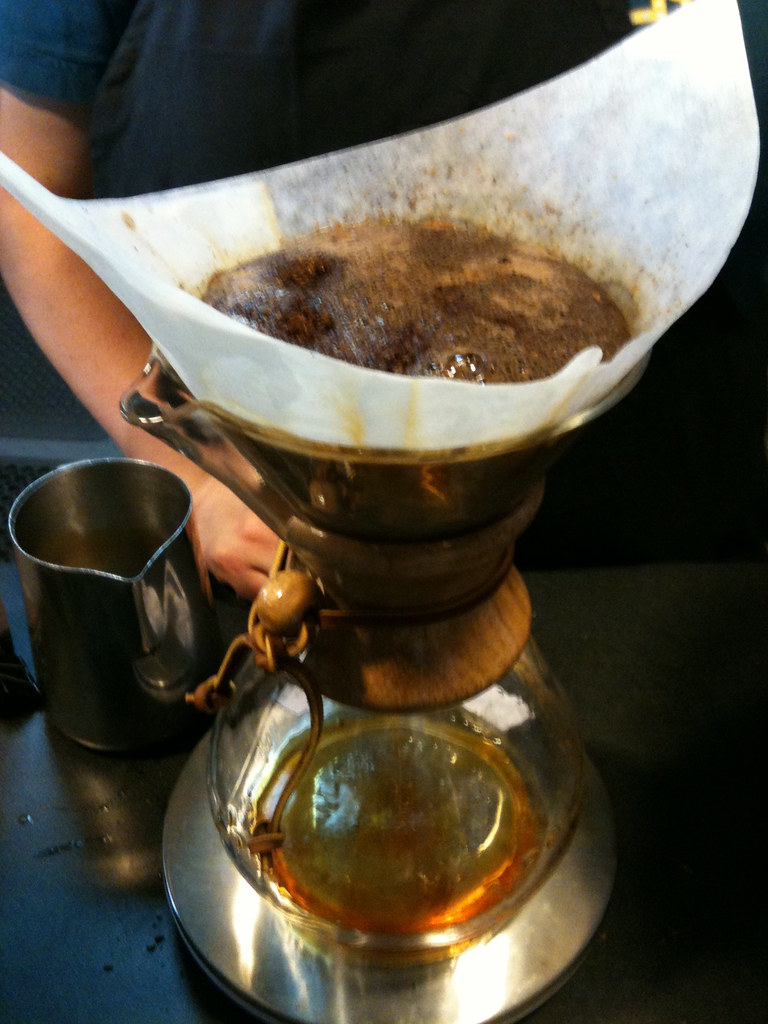
A bloom, then slow pours: the filter holds the grounds while the coffee drips into the glass below. Image: naotakem via Flickr, CC BY 2.0 (creativecommons.org/licenses/by/2.0/)
The whole brew takes about four to five minutes. A gooseneck kettle makes the pour easier, and a scale makes the ratio repeatable. It is possible to brew without them, but the results will vary from cup to cup.
The Filters
Chemex filters are thicker than most coffee filters. That extra thickness catches oils and fine particles, which is why the cup comes out so clear. The trade-off is a slower drip and a lighter body. If you like a heavier, richer cup, a French press or a metal-filter brewer may suit you better. The filters also cost more than standard paper ones, so factor that in over a year.

A Chemex on the counter: the narrow waist and wood collar make the shape easy to spot and easy to hold. Image: Jem Yoshioka via Flickr, CC BY-SA 2.0 (creativecommons.org/licenses/by-sa/2.0/)
Cleanup and Care
After brewing, lift the filter by its folded edges and drop it with the grounds into the trash or compost. Rinse the glass with warm water and a soft brush, or run a little soap through it. Avoid hard scrubbing on the inside. Because the glass is heat-resistant but not unbreakable, store it where it will not get bumped.
If the glass develops stains, a mix of warm water and a spoon of baking soda soaks them out. The collar should not be soaked, so wipe it with a damp cloth when needed.
Why It Tastes Different
Three things shape the flavor. First, the thick filter removes most oils and fine particles, so acidity and sweetness stand out more than body. Second, the glass adds no taste of its own. Third, the slow, controlled pour gives an even extraction when you pour steadily. Light roasts shine in a Chemex, because the clean cup lets floral and fruit notes come through.
Dark roasts also work, and they come out smooth with less bitterness than you might get from a drip machine. The brewer does not forgive stale beans, though. Fresh coffee ground just before brewing makes the biggest difference, bigger than any change in technique.
If you want to experiment, change one thing at a time: the grind, the water temperature, or the total brew time. Write down what you did. After five or six brews, you will know what your best cup looks like.
Who Should Buy It
The Chemex suits people who enjoy the process of making coffee and want a clean, bright cup. It is a good gift for someone who likes slow mornings. It is less suited to busy mornings, to people who like a thick body, or to anyone who is hard on glass.
Serving Size and Variations
The six-cup model brews about 30 ounces, which is enough for two or three mugs. If you drink alone, a smaller size or a different brewer may waste less. Larger Chemex sizes exist for groups. Whatever the size, keep the ratio near one part coffee to sixteen parts water, and adjust grind size to control the taste: finer if the cup is sour, coarser if it is bitter.
Pros and Cons
Pros
- Produces a very clean, bright cup with no sediment
- Glass does not hold flavors from past brews
- Looks good enough to leave on the counter
- No electronics, nothing to break but the glass
- Brews and serves from the same vessel
Cons
- Glass can break if dropped or knocked
- Needs a gooseneck kettle and a scale to do well
- Chemex filters are thick and cost more than standard ones
- Takes about five minutes of attention per brew
Verdict
The Chemex rewards patience. If you enjoy a slow morning ritual and want coffee that tastes clean and clear, it is one of the best pour-over tools you can buy. If you want to press a button and walk away, it is not for you. Pair it with a kettle that pours well and a scale, and the six-cup size gives you coffee for two or three people.