
Lodge 10.25-Inch Cast Iron Skillet Review: The Pan You Buy Once
Disclosure: This post contains affiliate links. If you buy through them, we may earn a commission at no extra cost to you.
How we reviewed this: this article is based on research, manufacturer specs, and published owner and expert reports. We did not test the product hands-on.

A Lodge pre-seasoned skillet as it arrives, with the label still on the cooking surface. Image: wlayton via Flickr, CC BY-SA 2.0 (creativecommons.org/licenses/by-sa/2.0/)
Cast iron has a reputation for being fussy, heavy, and old fashioned. The Lodge 10.25-inch skillet is the pan that argues the other side. It costs little, it arrives ready to cook, and it can outlive the kitchen it lives in. Based on manufacturer information and owner reports, here is what it does well, where it asks for effort, and who should buy it.
Over the next few sections we cover the cooking surface, heat behavior, care, and the trade-offs, then finish with a plain verdict.
What You Get
Lodge makes this skillet from a single piece of cast iron, with a short main handle, a small loop helper handle on the opposite side, and two pour spouts. It comes pre-seasoned with vegetable oil, so you can cook the day it arrives. There is no coating to chip and no plastic to melt, which is why the same pan works on a stovetop, in an oven, on a grill, or over a fire.
The 10.25-inch size is the one most home cooks reach for first. It fits two chicken thighs or a small batch of cornbread, and it still fits on a regular burner without hanging over the edge.
The Cooking Surface
The inside is rougher than a polished steel pan. That texture holds seasoning, which is the thin layer of baked-on oil that makes the pan slick over time. Out of the box the surface is not as nonstick as a coated pan, and fried eggs will want a little extra fat at first. After a few weeks of regular cooking with oil, the surface darkens and eggs release far more easily.

The Lodge skillet shows its helper handle and pour spouts, the two details that make it easy to lift and drain. Image: Cullen328 via Wikimedia Commons, CC BY-SA 3.0 (creativecommons.org/licenses/by-sa/3.0/)
The helper handle is more useful than it looks. Cast iron is heavy, and a one-handed lift of a full pan is easy to get wrong. Gripping the loop with your other hand makes moving the pan from stove to oven feel safe, and the spouts let you pour off fat without a ladle.
Heat and Searing
Cast iron heats slowly and holds heat for a long time. That is the reason steaks and burgers get such a good crust: the pan does not cool off when cold meat lands on it. Preheat for five minutes over medium heat, add a little oil, and wait until it shimmers. If you rush this step, the food sticks and the crust is weak.
The same weight that holds heat also makes the pan slow to react. If you turn the burner down, the pan stays hot for a while. Plan the heat ahead rather than adjusting on the fly, and you will get consistent results.
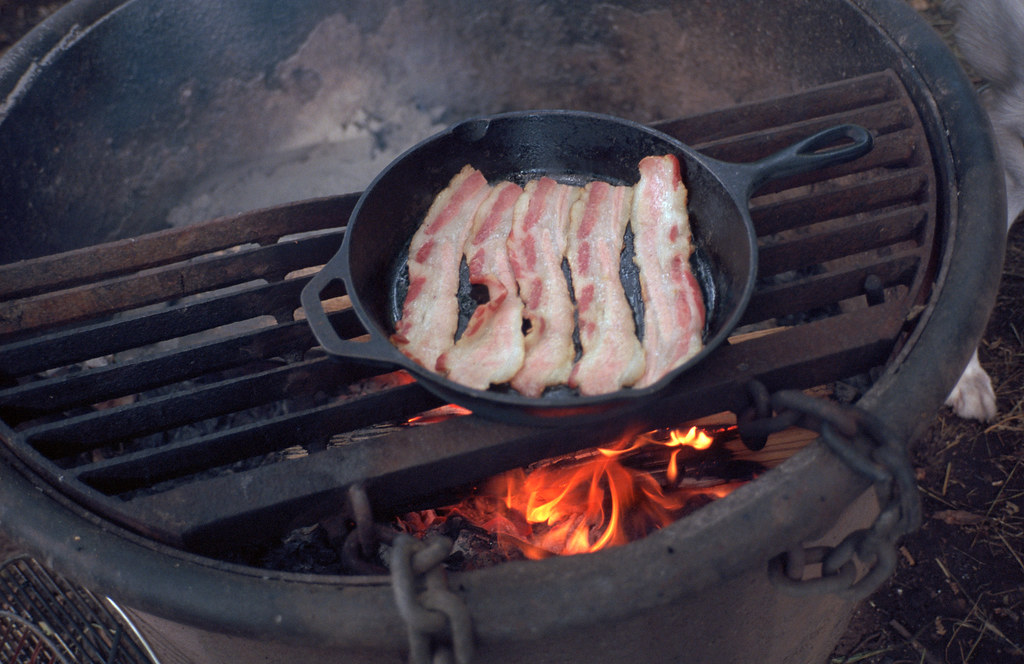
A Lodge pan cooking bacon over a campfire, the kind of heat this skillet is built to take. Image: JamesCohen via Flickr, CC BY 2.0 (creativecommons.org/licenses/by/2.0/)
Because it is a single piece of iron with no coating, there is no upper limit to the heat it can take. Campfire, grill, broiler, and hot oven are all fine. That range is the clearest reason to pick cast iron over a nonstick pan for people who cook outside or bake in a skillet.
Care Without the Myths
You do not need a ritual. After cooking, rinse the pan with hot water, scrub with a brush or a plain sponge, dry it on the burner for a minute, and wipe a very thin layer of oil on the surface. A small amount of mild dish soap will not ruin the seasoning. What does hurt it is soaking, running it through a dishwasher, or leaving it wet.
If you see rust, scrub it off, dry the pan, rub oil on it, and bake it upside down in an oven for an hour. The pan recovers. That is the main promise of cast iron: it is hard to break for good.
Where It Falls Short
It is heavy, and a full pan is a workout. It also reacts with acidic foods. A long simmer of tomato sauce can strip seasoning and leave a metallic taste, so keep tomato dishes short or use another pot. And it takes a few uses to feel nonstick, which can frustrate people who expect it from day one.
If you are looking for the best price, the skillet is also one of the cheapest options in the category, so there is little reason to compare it with expensive boutique cast iron unless you care about a smoother, polished finish.
Who Should Buy It
This skillet suits people who want one durable pan for searing, baking, and frying, and who do not mind a little care. It is a strong first cast iron purchase because the cost is low and the learning curve is short. It is a poor match for anyone who wants a lightweight, dishwasher-safe pan, or who cooks mostly acidic sauces.
Pros and Cons
Pros
- Ready to cook out of the box, pre-seasoned
- Excellent sear and heat retention
- Works on stove, oven, grill, and campfire
- Helper handle and pour spouts add control
- Low price for a pan that can last decades
Cons
- Heavy to lift and move
- Not very nonstick until it builds seasoning
- Handles get hot, so use a mitt
- Acidic foods can strip the seasoning
Verdict
The Lodge 10.25-inch skillet is the safest way to try cast iron. It does the job of a much more expensive pan, and it gets better with use. If you want a pan for steaks, cornbread, and weekend breakfasts, it is a smart buy. If weight or acidic cooking is a deal breaker, look elsewhere.